Other Voices: The Connexions Newsletter |
It’s cold. It’s dark. The sun rarely makes an appearance. Apparently it’s spending most of its time over the Southern hemisphere, where they are marking the Summer Solstice. It’s tempting to stay indoors as much as possible, look at our screens, and wait for spring to arrive.
But no! Go outside. (After you’ve finished reading this newsletter on your screen, of course.) Spring is already on its way. You just have to know where to look for it.
Among the small pleasures that lift my spirits this time of year are the buds on the trees and shrubs. They’re small, tightly wrapped against the cold, snow, and wind, but they are there, already formed, waiting for spring to arrive so they can open. I look at them, and it gives me a little surge of hope and happiness.
It’s perhaps a sign of how we have lost our connection with nature that it’s common to hear people express surprise when I mention winter buds (which, as you can tell, I’m prone to doing). ‘I thought buds form in the spring,’ they’ll say. No, actually. Deciduous trees form the buds which will become next year’s flowers or leaves in late summer. They withdraw the moisture from them so they won’t freeze. When spring does arrive, they are ready to burst into action. Except, of course, the ones that have been eaten during the winter. Winter buds are an important food source for deer, squirrels, and a number of over-wintering bird species. That’s why trees produce so many buds. You can’t miss them, once you know to look for them.
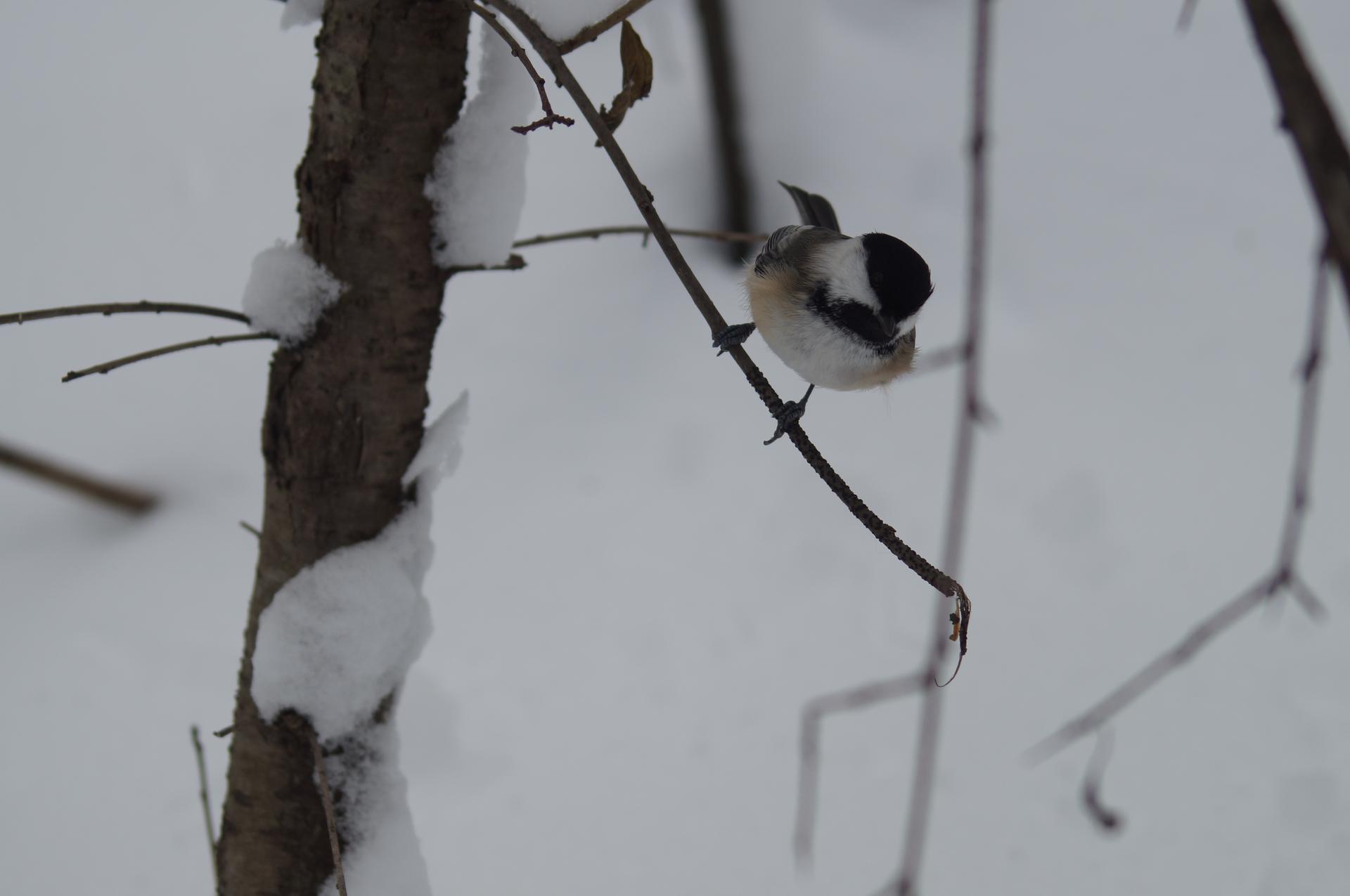
Another of the pleasures of winter in Canada, when you walk in a place that has trees, is encountering chickadees. And you may encounter them almost everywhere. Their range extends from Newfoundland to the Pacific, and almost up to the Arctic. Chickadees are simply loveable. They are curious and friendly, and readily interact with humans. They’ll land on a branch two feet away from us, or even on our hands.
Yet they are in no sense tame: they are wild birds, independent and tough, known to mob owls ten times as big as they are, and remarkably hardy. They also have incredible memories. They cache food items for retrieval in the winter: studies estimate that a chickadee can hide thousands of items, and then find them again when needed.
And chickadees are as tough as you can get. On one of our winter camping adventures in Algonquin Park, during a week when it was minus 35 at night, minus 25 during the day, and no other birds or mammals were to be seen, we’d set out on our skis each day, and every day, somewhere along whatever trail we were on, there they were: chickadees, these little birds weighing less than half a ounce, foraging in the bitter cold. It is probably anthropomorphizing to say they were cheerful, but they certainly seemed cheerful. And they will cheer you up, if cheering up is what you need.
So go for a walk in a place where there are trees. Look for the buds. And say hi to the chickadees. Ulli Diemer |
|
|
The Cloud's Not Fluffy, It’s a Hot, Loud, Energy-Voracious Factory
|
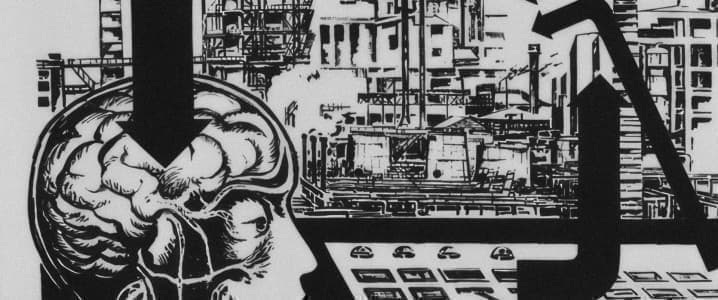
“The Cloud” might be the greatest branding trick in history. It sounds fluffy, ethereal, and notably light. It implies that our digital lives…our emails, our crypto wallets, our endless scrolling…exist in some vaporous layer of the atmosphere, detached from earthly constraints. But if you actually drive out to Loudoun County, Virginia, or stare at the arid plains of Altoona, Iowa, you realize the Cloud is actually just a very big, very loud, and very hot factory. |
|
|
“Politicians, the police and the media want millions of us to imagine we are alone in grieving the slaughter of Gaza’s children – and that our grief is shameful. They need us to succumb to their lies,” says Jonathan Cook. “But we must never forget. We are many. And it is they, not us, who are the monsters.” |
|
|
This report, by the Jewish Faculty Network, shines a light on how the current discourse about anti-semitism in Canada serves to manufacture consent for Israel’s genocide in Gaza.
By analyzing the public statements, social media posts, and media releases from Centre for Israel and Jewish Affairs (CIJA), this report reveals how CIJA’s operates to actively support the state of Israel and its genocidal campaign. The report concludes that: - CIJA promotes anti-Palestinian racism through the idea that unrestricted violence against Palestinians is necessary for Jewish safety.
-
CIJA promotes anti-Palestinian racism through a false narrative linking the movement for Palestinian rights and the rise of anti-semitism in Canada.
- CIJA engages in anti-semitism by defining Jewish identity as Zionist and anti-Palestinian through its persistent exclusion of large segments of Jewish people and voices from a singularly presented “Jewish community.”
-
CIJA’s advocacy for the erosion of free speech, academic freedom, and increased securitization and criminalization is used to silence criticism of Israel and the genocide of Palestinians.
|
|
|
Capitalist depravity: betting on slaughter |
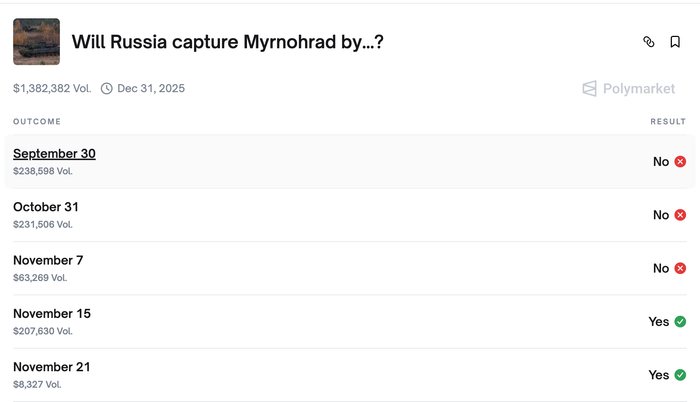
There are now online gambling platforms which allow users to bet on the outcome of real-world events. For example, you can place bets on the outcomes of battles in the Russia-Ukraine war. And where money is involved, there is always the possibility of corruption – that is, corruption above and beyond the moral depravity of betting on mass murder.
|
|
|
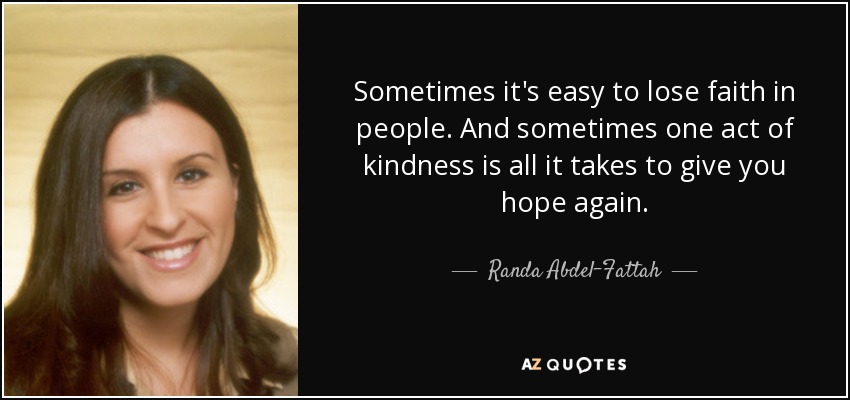
The Weekend Briefing: Interview with Randa Abdel-Fattah |
Antoinette Lattouf interviews Australian author and academic Randa Abdel-Fattah, who has been under ferocious attack from the Zionist lobby for speaking out against the genocide in Gaza. Randa Abdel-Fattah’s outspokenness led to her $870,000 research grant being withdrawn, as well as an ongoing campaign to get her fired from her university position. In the interview, she explains why she will never ‘shut up’ about genocide. The interviewer, Antoinette Lattouf, was herself dismissed from her job at the Australian Broadcasting Corporation after she shared a report on social media from Human Rights Watch documenting Israel’s use of deliberate starvation in Gaza.
|
|
|
This film focuses on the Palestinian revolt in the 1930s against the British Mandate, a rebellion that began peacefully but escalated into violence in response to intensifying British repression. Amid the destruction of Gaza and settlement expansion in the occupied West Bank, it is a tale for our times. |
|
|
Newly online, The Ross Dowson archive covers the period of Canadian Trotskyism from the late 1930s until the 1990s. Ross Dowson was a leader in the united Canadian Trotskyist movement from the period of WWII until 1973. He was the key organizer, activist, and theoretician of the movement at that time as well as being the Canadian representative to the Fourth International.
The documentation includes correspondence, journals of the movement (both in English Canada and Québec), internal documents having to do with policy, political decisions, and political principles. The most critical positions associated with the movement during Ross Dowson’s leadership are those of the centrality of and orientation to the labour party, i.e. first, the CCF, and second, the NDP. Other critical positions include Québécois self-determination, Indigenous self-determination, women’s liberation/feminism, international solidarity with colonial and semi-colonial countries, the right of self-determination of minorities within states.
|
|
|
Your support is needed to keep Connexions going |
All of the work of the Connexions project is done by volunteers, but our expenses include rent, phone and computer costs and technical support, as well as expenses related to our ongoing project of converting printed archival materials into digital formats. You can make a one time or regular monthly contribution through the Donate page on the Connexions website.
|
|
Many of us have made working for social justice a lifetime commitment. If you are thinking about leaving a legacy for social justice that will live on, you might want to consider leaving a bequest to Connexions in your will. If you'd like to discuss this option, please contact us:
Connexions Archive and Library
See the Bequest page. |
|
|
Follow us on Facebook or Twitter |
|
|
Copyright Connexions 2025. Contents are licensed under a Creative Commons Attribution Non-Commercial License. This means you are welcome to share and republish the contents of this newsletter as long as you credit Connexions, and as long as you don’t charge for the content. Issues edited by Ulli Diemer |
|
|
|