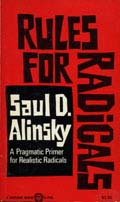
Rules for Radicals
A Practical Primer for Realistic Radicals
Alinsky, Saul
Publisher: Random House, New York, USA
Year Published: 1971
Pages: 196pp Dewey: 323.4
Resource Type: Book
Cx Number: CX6548
Alinsky's Rules for Radicals provides perspectives, principles and lessons for realistic radical organizers.
Abstract:
Aiming to inspire and guide a new generation of young radicals, Saul Alinsky wrote Rules for Radicals as a primer for the realistic organizer. Alinsky was against the far-left radical with his outdated rhetoric that only served to divide people. Instead, Alinsky believed the realistic radical, who is flexible enough to work in the system, would be more successful in organizing for the revolution to empower the voiceless majority. To this end, free from a specific political ideology or dogma, Alinsky shares his knowledge on how one can organize effectively to enact change.
The first half explains the perspectives and qualities of an effective organizer. Alinsky believed radicals must be realistic, and ethics and politically loaded words must be reexamined pragmatically. Other qualities must be developed through experience, such as imagination, curiosity, and a sense of humour. Most importantly, the art of communication is paramount to the success of an organizer.
The second half is dedicated to the organizer in action. Alinsky first illustrates the problems an organizer will face while in the initial stages of organizing a community. Next, a study of tactics, including thirteen central rules, is provided. Above all, Alinksy emphasizes creativity and flexibility with using what is available; he warns against using old tactics, as new specific situations call for new specific tactics. For example, organized stockholder proxies were shown as an effective tactic at a time where demonstrations and boycotts had failed.
Alinsky concludes by proposing that the future of organization in America lies in its middle class majority. He believed attention must be paid to the lower middle class who feel the most victimized and are most resistant to change. It is therefore an organizer's job to bring a reformation of attitudes in the frustrated middle class to bring about the next revolution.
[Abstract by Jared Ong]
Table of Contents:
Prologue
The Purpose
Of Means and Ends
A Word About Words
The Education of an Organizer
Communication
In the Beginning
Tactics
The Genesis of Tactic Proxy
The Way Ahead
Subject Headings
